
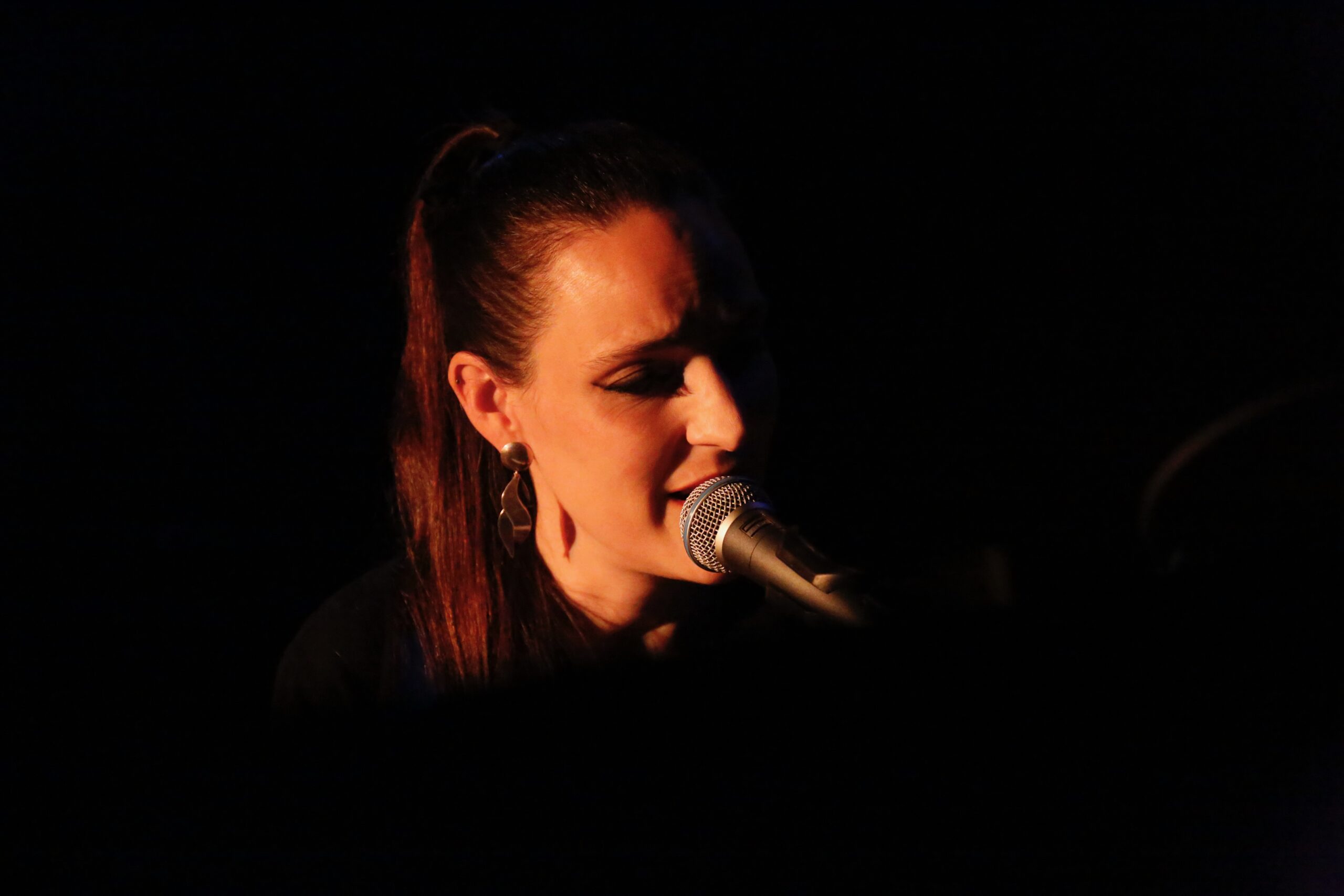
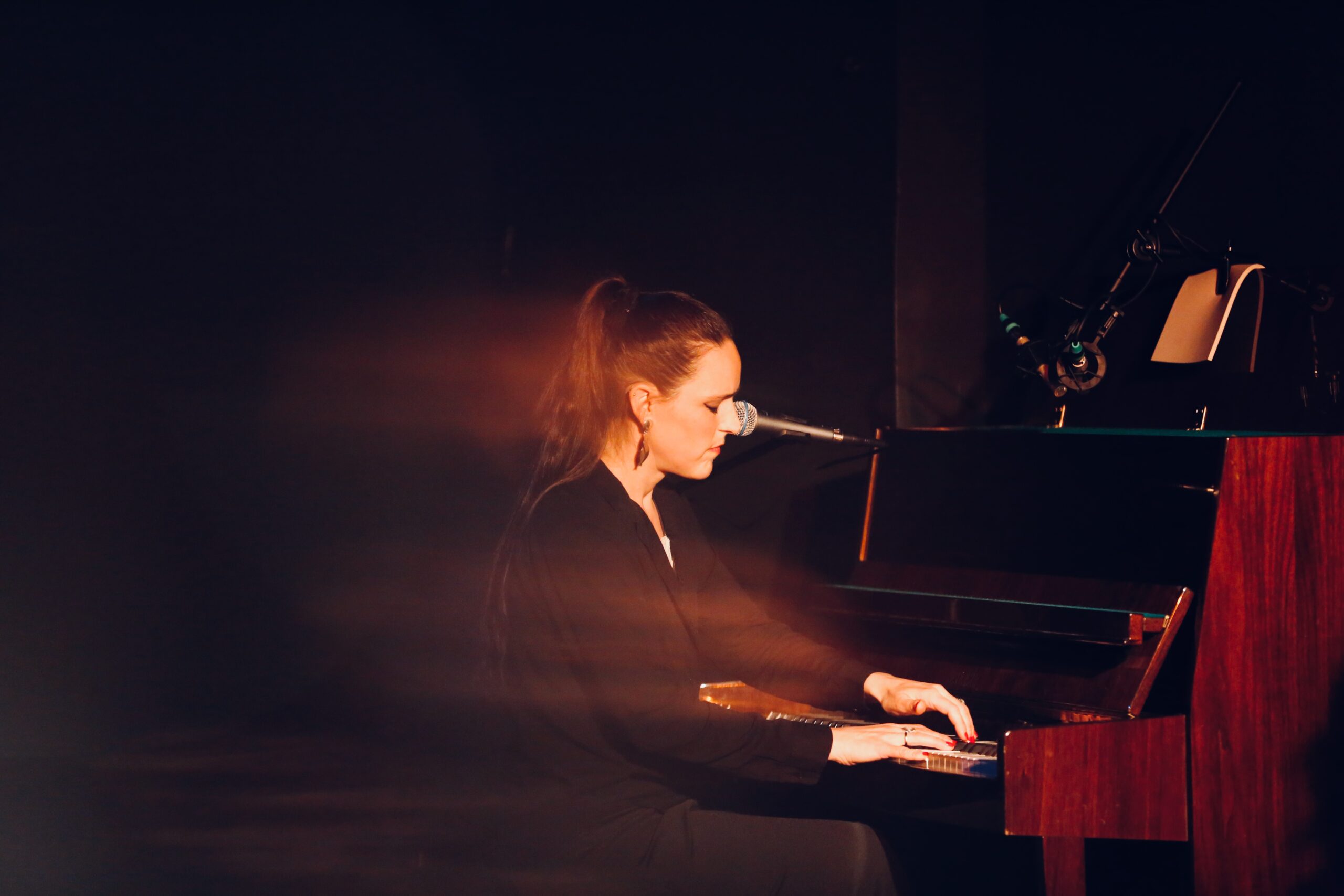
Love Is Not A Weakness is a debut album, but by no means a premiere for the Berlin-based musician and composer Susanne Folk. The German-American, whose last name is pronounced like the English “folk”, has been present for years in stylistically different formations such as Azolia, the Susanne Folk Trio & Celina Muza, Call Me Cleo, and until 2012 So Weiss, mostly on the saxophone or clarinet. In Call Me Cleo she takes on the role of the lead vocalist. The bands received a lot of positive feedback for their productions, and tours took them through North America, China, as well as African and European countries. With Love Is Not A Weakness, Susanne Folk presents herself as a singer/songwriter for the first time, solo at the piano.
She has been familiar with the piano for a long time; she learned it as a child and has always composed pieces for her own groups and others. At the same time, you can clearly tell from her songs that Susanne Folk approaches them like a saxophonist. She thinks primarily in terms of melodies and to a lesser degree harmonies and chords. For a long time, it didn’t occur to the trained jazz musician to record a solo album, even though the idea had been growing in her subconscious mind for a while.
Musically, Susanne Folk moves into the terrain of advanced pop, with selective references to other sources of inspiration such as Amy Lee (Evanescence), Tori Amos and Rufus Wainwright. In some facets, Folk reveals a penchant for Gothic aesthetics, and quite a few chords nod to her jazz experitise. A certain melancholy pervades many of the tracks, promoted by the singer’s rather dark vocal lines and expressive phrasing.
With her first solo album, Susanne Folk makes a striking statement. Love Is Not A Weakness relies on the power of a charismatic voice accompanied by the organic sounds of the grand piano. This focus, which goes hand in hand with a determined avoidance of electronic sounds, creates a special intimacy that matches Folk’s thoughtful lyrics. The result is a collection of timeless songs of great intensity.
Love Is Not A Weakness is a debut album, but by no means a premiere for the Berlin-based musician and composer Susanne Folk. The German-American, whose last name is pronounced like the English “folk”, has been present for years in stylistically different formations such as Azolia, the Susanne Folk Trio & Celina Muza, Call Me Cleo, and until 2012 So Weiss, mostly on the saxophone or clarinet. In Call Me Cleo she takes on the role of the singer. The bands received a lot of positive feedback for their productions, and tours took them through North America, China, African and European countries. With Love Is Not A Weakness, Susanne Folk presents herself for the first time as a singer/songwriter alone at the piano.
She has been familiar with the piano for a long time; she learned it as a child and has always composed pieces for her own groups and others. At the same time, you can tell in her songs that Susanne Folk comes from the saxophone. She thinks primarily in terms of melodies and somewhat less in terms of harmonies and chords. It didn’t occur to the studied jazz musician for a long time to record a solo album, even though the idea had been growing in her subconscious for a while.
Musically, Susanne Folk moves into the terrain of advanced pop, with selective references to sources of inspiration such as Amy Lee (Evanescence), Tori Amos and Rufus Wainwright. In some facets, Folk reveals a penchant for Gothic aesthetics, and quite a few chords refer to their jazz experiences. A certain melancholy pervades many of the tracks, promoted by the singer’s rather dark vocal lines and expressive phrasing.
With her first solo album, Susanne Folk makes a striking statement. Love Is Not A Weakness relies on the power of a charismatic voice accompanied by the natural sounds of the grand piano. This concentration, which goes hand in hand with a determined avoidance of electronic sounds, creates a special intimacy that matches Folk’s thoughtful lyrics. The result is a collection of timeless songs of great intensity.
“…The Berlin-based musician and composer, known for bands like Azolia and Call Me Cleo, impresses as a sensitive songwriter and singer on ten songs, including outstanding numbers like “The End Of Me” and “In Your Next Life”. .” – Music Week
“This is skillful songwriting in a pure form, namely only with a voice accompanied by the piano. Anyone who dares to do that dares a lot…The compositions are catchy, not just “In Your Next Life” or “Pain”, which could easily find their way onto the radio. Good popular music that only barely touches on jazz.” – Susanne Müller, Jazz Podium
“…Musically, Folk takes unconventional paths on the piano, more in terms of the melody than the harmony, which makes the music sound a bit restless, sometimes even erratic, but also unusual. One might be reminded of modern songwriters like Tori Amos – Susanne Folk also cites her as an inspiration, only to then add: “I like to be inspired, but when I compose, I really try to focus only on myself, on my own inner voice.” – Nabil Atassi, Jazzthing
“…She has been familiar with the piano since childhood and has also composed songs on it for bands. Maybe that’s why it doesn’t sound like a debut. A mature artist is at work here who knows how to dress her emotions in beautiful piano melodies and rhythmic figures. And even if a dark melancholy runs through the album – it is the power of love and mutual respect that matters to her, as the album title suggests.” – Melodiva June 23, 2023
Click to enlarge:

More information:
 idrismedia.com
You must be logged in to post a comment.